


 Cart
Cart
 sales@molnova.com



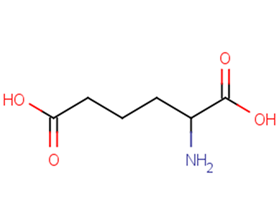
Aminoadipic acid
CAS No. 542-32-5
Aminoadipic acid( DL-2-Aminoadipic acid )
Catalog No. M19620 CAS No. 542-32-5
Aminoadipic acid (2-aminoadipate) is a metabolite in the principal biochemical pathway of lysine. It is an intermediate in the metabolism of lysine and saccharopine. It antagonizes neuroexcitatory activity modulated by the glutamate receptor N-methyl-D-aspartate (NMDA).
Purity : >98% (HPLC)
 COA
Datasheet
HNMR
HPLC
MSDS
Handing Instructions
COA
Datasheet
HNMR
HPLC
MSDS
Handing Instructions
| Size | Price / USD | Stock | Quantity |
| 500MG | 38 | In Stock |


|
| 1G | 67 | In Stock |
|
Biological Information
-
Product NameAminoadipic acid
-
NoteResearch use only, not for human use.
-
Brief DescriptionAminoadipic acid (2-aminoadipate) is a metabolite in the principal biochemical pathway of lysine. It is an intermediate in the metabolism of lysine and saccharopine. It antagonizes neuroexcitatory activity modulated by the glutamate receptor N-methyl-D-aspartate (NMDA).
-
DescriptionAminoadipic acid (2-aminoadipate) is a metabolite in the principal biochemical pathway of lysine. It is an intermediate in the metabolism (i.e. breakdown or degradation) of lysine and saccharopine. It antagonizes neuroexcitatory activity modulated by the glutamate receptor N-methyl-D-aspartate (NMDA). Aminoadipic acid has also been shown to inhibit the production of kynurenic acid a broad spectrum excitatory amino acid receptor antagonist in brain tissue slices.
-
In Vitro——
-
In Vivo——
-
SynonymsDL-2-Aminoadipic acid
-
PathwayOthers
-
TargetOther Targets
-
RecptorOthers
-
Research Area——
-
Indication——
Chemical Information
-
CAS Number542-32-5
-
Formula Weight161.16
-
Molecular FormulaC6H11NO4
-
Purity>98% (HPLC)
-
Solubility1 M HCl:50 mg/mL;DMSO:Insoluble;Water:<1 mg/mL
-
SMILESNC(CCCC(O)=O)C(O)=O
-
Chemical Name——
Shipping & Storage Information
-
Storage(-20℃)
-
ShippingWith Ice Pack
-
Stability≥ 2 years
Reference
1.Wang TJ et al. 2-Aminoadipic acid is a biomarker for diabetes risk. J Clin Invest. 2013 Oct;123(10):4309-17.
molnova catalog



related products
-
TGFβ1-IN-1
TGFβ1-IN-1 is an orally active TGF-β1 inhibitor that inhibits the production of TGF-β1-induced fibrotic markers (α-SMA and fibronectin) and can be used for the study of cancer and autoimmune diseases.
-
Urotensin II, mouse
Urotensin II, mouse acetate (9047-55-6 free base) is an endogenous ligand for the orphan GPR14 or SENR. It is a potent vasoconstrictor.
-
Bergamjuicin
Bergamjuicin is a flavonoid isolated from Citrus grandis L. Osbeck with cellular antioxidant activity (CAA) and oxygen radical absorption capacity (ORAC).
